
Craft, Gaudí and Barcelona
The Gaudí tile: walking on the sea in Barcelona
Geometry and nature: Gaudí's secret code
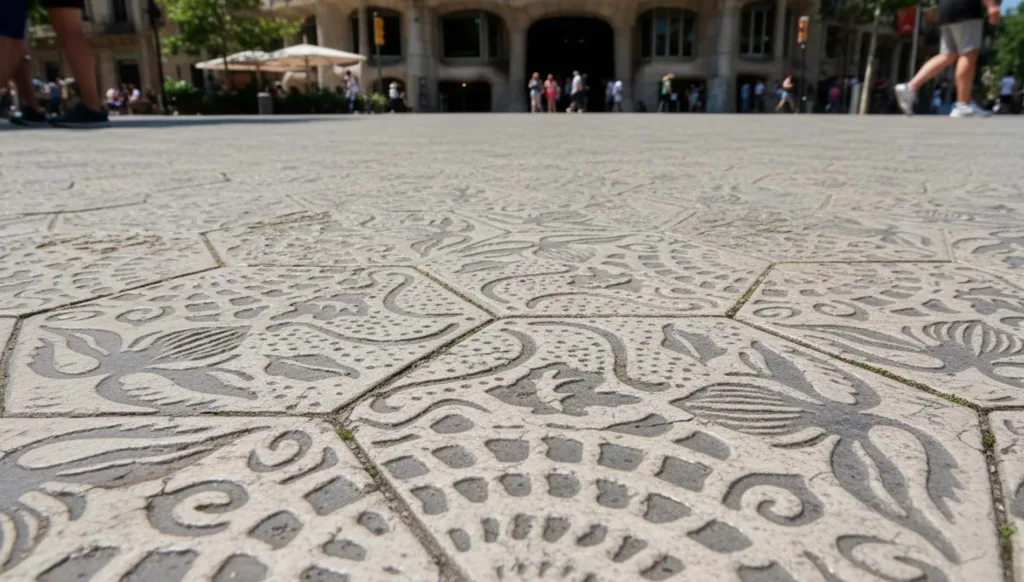
In 1904, Antoni Gaudí designed a hexagonal tile capable of turning the seabed into a pavement. A starfish, a seashell and a seaweed motif are spread across the pieces: the complete drawing emerges when they are joined. The shape is simple; the effect is remarkable.
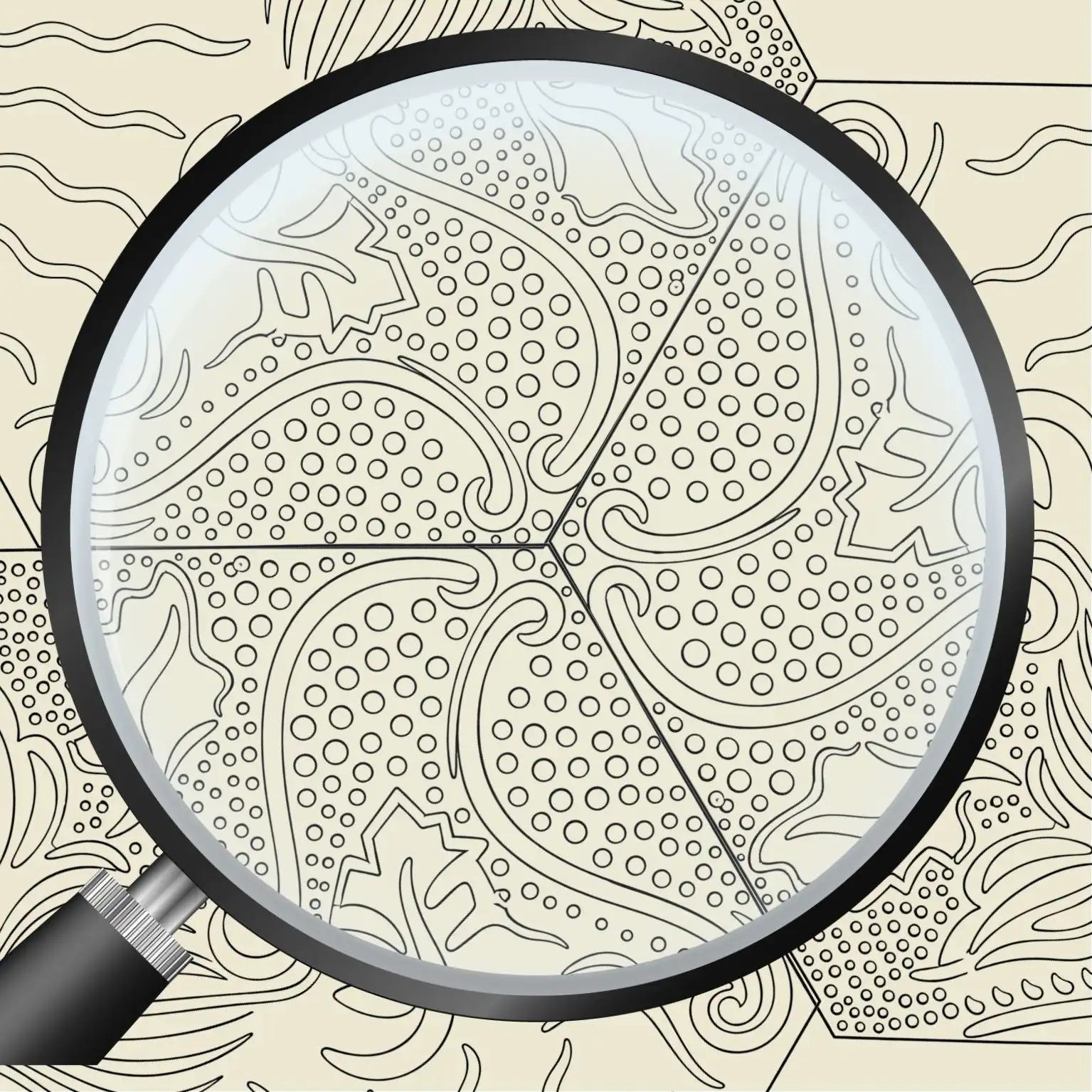
The mould in the photograph shows how this relief is created. Several colours are not needed: light falling across the shapes and the repeated hexagon bring movement to the whole. A design intended both to be examined closely and to be walked upon.

A revolution beneath our feet: the origins
Gaudí did not separate architecture from its details. In 1904, he worked with Escofet on a hexagonal cement tile forCasa Batlló, inspired by marine life. The tiles were ultimately laid in service rooms atCasa Milà – La Pedrera. This change of destination explains how a design conceived for an interior became one of the defining features of Barcelona's streets.
Documented by:Joan Bassegoda i Nonell
One hexagon, a continuous drawing
Hexagonal geometry allows the pieces to fit together and the marine motifs to spread without interruption. The same shape repeats, but the drawing changes when several tiles are seen together. These photographs capture the play between lines, relief and light.


The secret of seven tiles
A single tile does not show the complete drawing. Seven hexagonal pieces must be assembled to recognise all three motifs: starfish, seashell and seaweed. That is the ingenuity of the design: each piece has meaning on its own, but the composition appears when they meet.
Starfish Ophiuroide. A marine organism with long, winding arms and a distinctive radial geometry.

Ammonite fossil Ammonoidea. An extinct marine mollusc whose spiral shell preserves an almost perfect natural geometry.

Seaweed of the genus Sargassum Marine algae with branching, organic forms, common in temperate and warm waters.
An underwater ecosystem in the city
Gaudí brought marine life into an everyday object: the pavement. The motifs are not isolated ornaments but fragments that become complete when the tiles are combined. Stars, spirals and seaweed appear and disappear with the light and the direction of your gaze.
On Passeig de Gràcia we walk on the outdoor version, adapted in 1997. Its relief was reversed to withstand wear more effectively. The photograph of footsteps on the mosaic sums it up: this is a work best understood by walking across it too.

Gaudí: from the 1904 mosaic to the 1997 street tile
The hexagonal mosaic was designed by Antoni Gaudí in 1904 and originally produced by Escofet. In 1997, a version adapted for outdoor use appeared in the pavement of Passeig de Gràcia.
Mosaics Martí, a workshop founded in 1913 in Manresa, began making handmade reproductions of the indoor mosaic in its own formats in 2017.
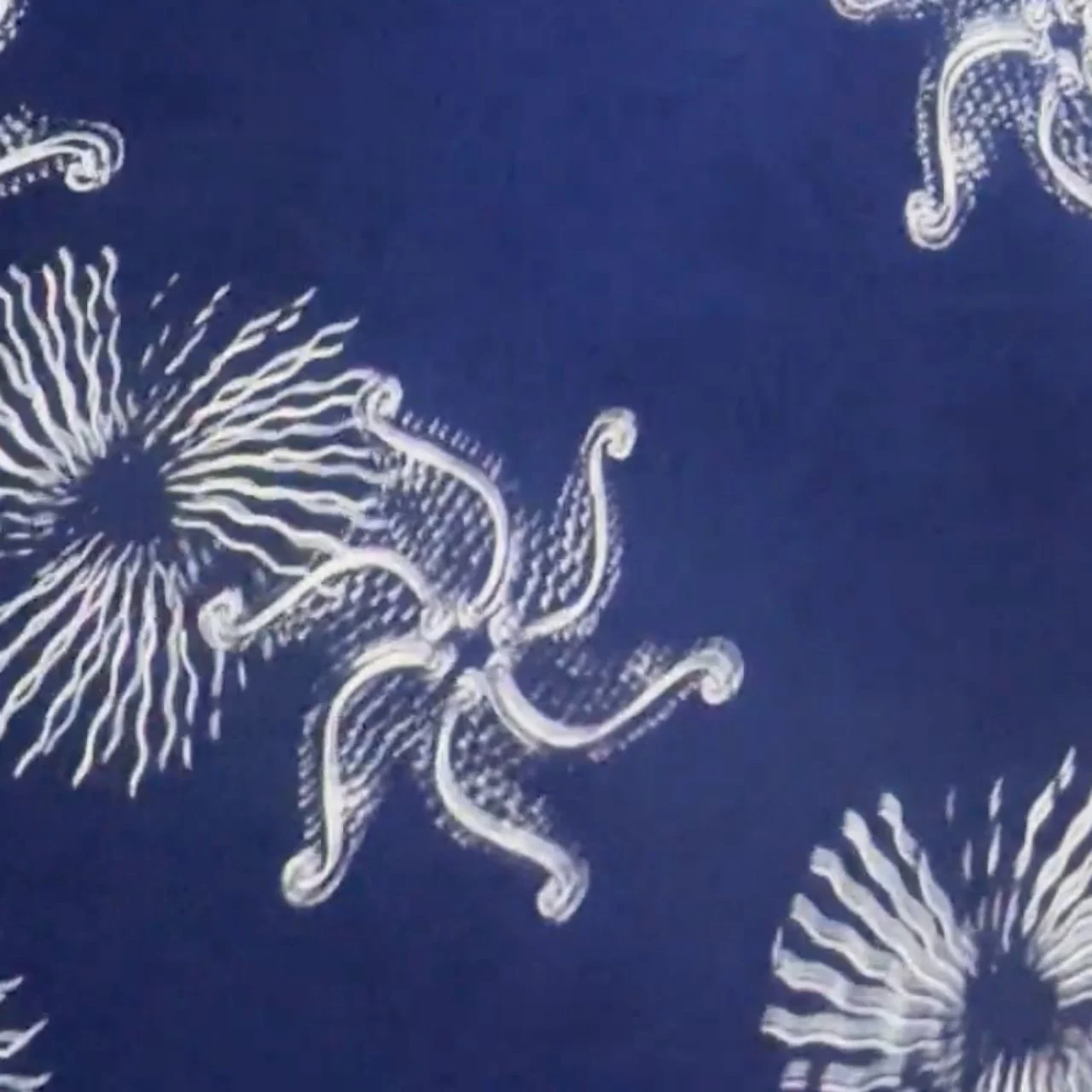
Reproductions individually crafted in Manresa, near Barcelona, byMosaics Martí
1904 · The original mosaic
Gaudí and Escofet developed a monochrome hydraulic tile for Casa Batlló that was eventually installed at Casa Milà. The original relief projected above the surface. In low-angle light, the marine shapes gained volume without the need for several colours.

1997 · The urban pavement
Escofet reinterpreted the mosaic for the sidewalks of Passeig de Gràcia. The outdoor version uses a different format and an inverted relief: the motifs are recessed, a solution designed to better withstand pedestrian wear.

2017 · The handmade reproduction
In Manresa, Mosaics Martí, a workshop founded in 1913, revived the interior version using traditional hydraulic tile techniques. Its 20 × 23 and 10 × 11 cm hexagonal mosaics are handmade reproductions, not exact copies of the original dimensions.

Little-known secrets beneath Barcelona's streets
A design made to repeat
The Gaudí tile is an early example of design applied to architectural space: a reproducible industrial form whose pattern only becomes clear when individual pieces come together.
What is a «panot»?
In Barcelona, a panot is a pavement tile used on sidewalks. Gaudí's hexagon and the well-known Barcelona Flower are two different designs, although both belong to the visual identity of the city.
Inverted relief
The grey pavement tile of Passeig de Gràcia is not identical to the 1904 original (green). In 1997, reversing the relief for outdoor use also changed the visual perception of the motif.
Chromatic innovation
Where most hydraulic mosaics used several colours, Gaudí chose a single colour, relying on the relief itself to create visual richness.
A collector's piece
The Museum of Modern Art in New York (MoMA) holds seven tiles from Casa Milà in its collection, dated between 1905 and 1907. They are not currently on display.
The 1997 reissue adapts the relief of the 1904 mosaic to the demands of an outdoor city pavement. Source: Escofet.
Conservation and restoration
Durability
The original raised relief was intended for indoor use. The urban adaptation reversed the forms to better withstand outdoor wear and foot traffic.
Maintenance
Caring for the pavement requires cleaning products suitable for the material and avoiding abrasive methods that could damage its surface.
Restoration
A respectful replacement must consider the size, relief, colour and context of the existing pieces. The indoor and outdoor versions are not interchangeable.


