
Design, content and judgement
Good news. Bad news. From Latin placeholder text to AI
FROM THE TRENCHES
30 years of web design, changing tools, and an old habit: designing before deciding what we want to say.
By Iván · Petit Gaudí
Latin made it all the way to court
“We’ll send you the content later.”
I’ve heard that sentence in professional offices, workshops, tech companies, nonprofits, artists’ projects and meetings with major brands. I’ve spent much of my working life in the trenches of web design, alongside freelancers, managers, developers, designers and all kinds of professionals. Each with their own needs and, naturally, their own deadlines.
But many shared a curious tradition: they wanted to see the design first. The words, photographs, services and story of the business would come later.
“Just put something temporary there for now.”
Temporary. That wonderful state of matter that can remain unchanged for years.
Once, a project ended up in court because a client refused to pay for work I had done. His argument to the judge was that the website’s text was in Latin. And, technically, he had a point: he had found Lorem ipsum.
The text was temporary because he had not supplied the content needed to replace it. The judge ruled in my favour.
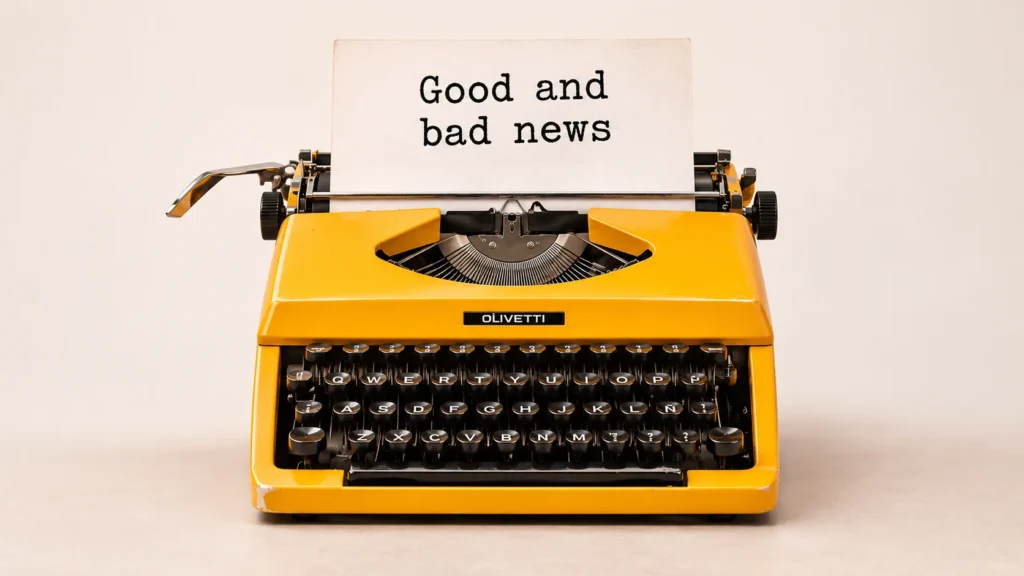
Good news for me. Bad news for him.
More importantly, a lesson: a website needs content, decisions and the involvement of the people who know the project. That remains true even when we can now build pages at extraordinary speed.
From HTML tables to artificial intelligence
In 1996, connecting to the internet began with sounds that were hard to describe. The modem seemed to be negotiating with a distant civilisation. Then came the wait: images loading piece by piece, HTML tables and browsers that did not always agree.
Then Flash arrived. We discovered websites could move. And move they did. Everything. We went from waiting for a photograph to load to waiting for an animation to finish before we could enter a site.
Progress doesn’t always travel in a straight line.
That era produced extraordinary creative work, along with a lesson that still holds:
Just because we can do something doesn’t mean we should.
Content management systems, smartphones, ecommerce, responsive design and analytics followed. We started asking not only what a website looked like, but whether it helped people and achieved its purpose. A site could attract thousands of visits and accomplish almost nothing. The numbers began to speak. Listening was another matter.
The tools had changed. Our habit of leaving the content until last, rather less so.
The work begins before opening the laptop
Talk. Listen. Ask. And ask again when the first answer doesn’t quite explain enough.
A craftsperson can spend half an hour describing how they make something and believe they’ve said nothing interesting. They may just have handed you the best content on their entire website.
A specialist can spend twenty years solving complex problems and still struggle to describe their work in three sentences. Not because they don’t understand it, but because they understand it so well.
That’s where communication design begins: not inventing what isn’t there, but finding, organising and explaining what deserves to be told. A conversation, a workshop visit or an old photograph can be worth more than hours searching for a perfect stock image.
We don’t need every last sentence written before designing. Content and design must grow together, but we do need to understand what we do, whom we serve, what makes us different and what we’re trying to achieve.
A website shouldn’t be a pretty container that we fill with words later. And direct human contact isn’t an administrative step to automate away: it’s part of the method.
And then one day, you’re the client
After years of working for other people, running your own projects removes one very convenient excuse.
You can no longer say the client hasn’t supplied the content. You are the client. And the content is still late.
At Petit Gaudí, I’m transforming a website that needs to be much more than a catalogue. Behind it are objects, materials, workshops and collaborations with independent artisans. The content exists before the computer is switched on; the challenge is documenting and telling it without losing its authenticity.
Nicola Mostallino is also part of the Petit Gaudí team. Drawing on his experience leading Komuniki in digital strategy, SEO and web communication, he is actively involved in assessing the project, making decisions and shaping our next steps. His commitment brings perspective and sound judgement beyond the tools themselves.
We’ve revised structures, languages, content and features. We’ve also made decisions we’ve had to correct. Some apparent improvements ended up complicating what we wanted to simplify. Experience helps you recognise that. It doesn’t make you immune.
At the same time, I’m developing Yestiva, a personal project for digital invitations. The idea sounds simple: create and share an invitation without technical knowledge. Behind that simplicity are design, forms, programming, payments, emails and privacy. The user doesn’t need to understand that complexity. They need the invitation to arrive.
Simplicity isn’t a starting point. It’s a result.
Two different projects, one rule: technology must adapt to the project’s real needs. We shouldn’t build a project merely to justify a technology we’re excited to use.
Now we can make mistakes much faster
In 2026, we can generate writing, images, translations, analysis and code in seconds. For many small businesses, this is a remarkable opportunity. But speed doesn’t guarantee we know what we’re trying to achieve.
We can create ten homepage designs before deciding what that page needs to explain. If none fits, we create ten more. At this rate, we could have a different website for every day of the year. All beautiful. And still have no idea what to put on the homepage.
Speed doesn’t fix a flawed method. It only lets us repeat it faster.
None of this diminishes programmers, photographers, linguists, designers or other specialists. Quite the opposite: their experience matters when choosing tools, judging results and dealing with the nuances automated production can miss.
A spectacular image may fail to tell a true story. A word-for-word translation can lose its meaning. A program may work in a demo and fail when someone tries to use it for real.
Technique matters. A great deal. But it doesn’t replace method or the conversation between those building a product and those who understand the business.
Back to the blank page
If you’re thinking of building or renewing your website, start without choosing a template or technology. Find a quiet moment and ask:
- 01 What do I want to say, and to whom?
- 02 Which photographs, processes, documents and experiences do I already have?
- 03 What do I want to achieve?
- 04 Which professionals should I work with?
- 05 How will I know if it works?
- 06 And most importantly, am I willing to be involved?
Because content, decisions and professional knowledge don’t appear by magic. Not even with artificial intelligence.
From screens to hands
I’ve always loved craftsmanship.
The kind you make with code, and the kind you can touch with your hands.
For much of my life, I’ve designed and built things that exist inside a screen. In recent years, I’ve also designed and produced handmade pieces for Petit Gaudí. I’ve discovered that these two worlds have more in common than you might think.
Both need ideas, tools, patience and decisions that don’t always work out the first time. The difference is that now, when I finish a piece, I can hold it in my hands. And if something doesn’t fit, I can’t blame the browser.
At Petit Gaudí, the content doesn’t need to be invented. It’s right in front of me: in the materials, the objects, the workshops and collaborations with other independent artisans, where we share knowledge, opportunities and benefits. A way of working in which everyone contributes and everyone has something to gain.
All we have to do is observe it, document it and find the right way to tell its story.
I’ve always wanted what we make to have three qualities: handcrafted, iconic and imperfect.
Handcrafted
Knowledge and work go into it.
Iconic
A good idea should be recognised and remembered.
Imperfect
Not everything valuable needs to look machine-made.
Perhaps that’s not a bad way to think about web design, either.
Tools change. Judgement, experience and people still matter.
Good news: we’ve never had so many possibilities.
Bad news: we still have to decide which of them are worth pursuing.
Thank goodness.