
Craft, Gaudí and Barcelona
A website needs craftsmanship too: 6 digital tips for artisans
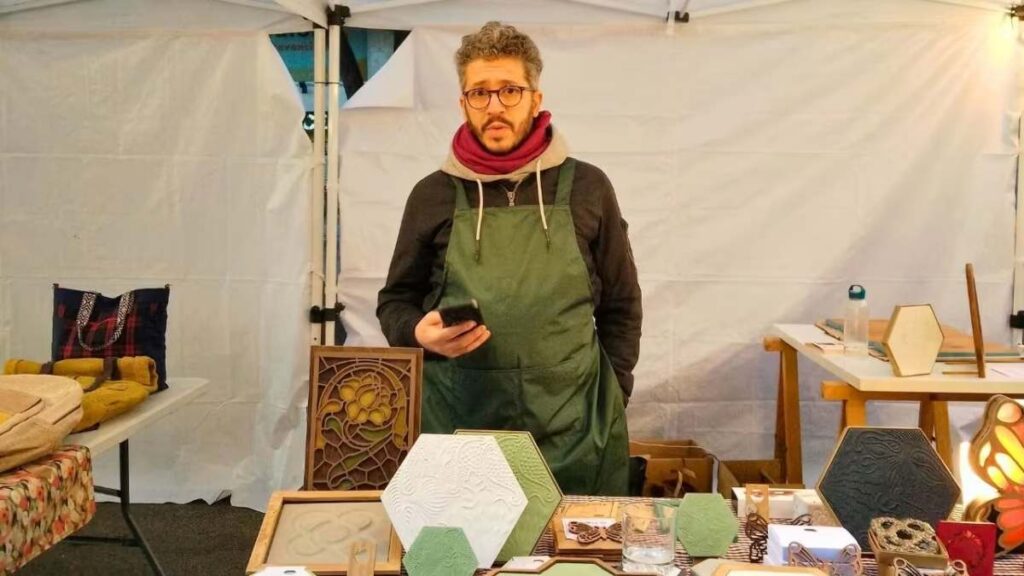

Nicola Mostallino answers: Petit Gaudí's consigliere digitale
At Petit Gaudí we champion traditional crafts, but we also know that good hands alone are no longer enough to make a workshop visible. A website, an online shop or a product page cannot replace the craft, but it can help explain it.
After closing our physical shop in the Eixample, petitgaudi.com brings together craftsmanship from Barcelona: our own pieces, workshops and a network of makers.
During this process we have worked with Nicola Mostallino, of komuniki.io, who has supported us with website strategy, SEO, UX, content and digital communication. 'Komuniki' means to communicate or share. That idea fits where we are now: being online is not enough. You need to explain who you are, what you make and why people should trust your work.
Nicola is Italian, a digital strategist and a DJ who plays brilliant sets of Italian music from the 1960s to the 1990s. Perhaps that's why he understands something important: a website, like a good set, isn't built by throwing pieces together. It needs rhythm, order, intention and a sense of when each element belongs.
6 digital tips for makers, for everything else there's AI.

1. Before touching your website, organise the project
A website doesn't begin in WordPress, Shopify or WooCommerce. It begins earlier.
It starts when the maker knows what they sell, who they sell it to, what makes it special and what a visitor should do on entering the site: buy, enquire, book, visit a workshop or discover a collection.
This is one of the most common mistakes: commissioning a website without knowing what content it needs. Without structure, words and images, the digital project simply doesn't exist. Then come the rush, changes, delays and that classic line from modern disasters: 'we'll work it out as we go'.
No. Better to work it out first.
2. Think about Google, but write for people
Work on SEO and visibility in Google
But SEO shouldn't make you write like a robot with a hangover. A craft website needs to be findable, yes, but it also needs to sound human.
The goal isn't to stuff a page with keywords. It's to explain the craft's actual value: materials, process, origin, uses, history, delivery, customisation and how it differs from an industrial product.
Google can be a doorway for a maker. But whoever walks through needs to understand quickly where they are.
Here's one clear piece of advice: every important page should answer three things: what it is, who it's for and why it's valuable.
3. Photography shouldn't just decorate: it should build trust
In a physical shop, the customer can touch a piece. Online, they cannot.
That's why images have much more work to do. They should show the whole product, details, size, material, context and, when possible, the process. A pretty AI image can help. A coherent image sells better.
In craftsmanship, polishing things too much can backfire. An image should demonstrate what's real. Texture, scale and honest imperfection are part of the value.
Like a good espresso: small, straightforward and without unnecessary froth. If it's good, you can tell.
4. Look after UX: customers shouldn't have to guess
Nicola stresses UX and conversion
Turning visitors into customers, contacts, calls, emails or purchases. For a maker, this matters. The site shouldn't be a disconnected maze. It should guide.
Your homepage isn't a storage room. Not everything fits there. Not everything deserves the same size. Not everything needs to shout.
A good website has a hierarchy: first it orients, then explains, and finally invites someone to act. If visitors can't tell what you sell or where to click, they leave. Not angrily; silently. That's worse.
Nicola knows this from DJing with vinyl: if everything plays at once, you don't have music. You have noise.
5. Open up to other languages if you sell internationally
There's an interesting point here
AI translation, human review and a multilingual approach to reach customers in different countries.
Someone might discover a piece in a physical shop and buy it later from France, Italy, Germany, the United States or any other market. But the website needs to speak a language they understand.
Not every project needs ten languages. Many do need to consider whether they're missing sales by talking only to people close to home.
A handmade product can be local. Its communication doesn't need to stay inside the neighbourhood.
6. Keep the website alive: reviewing is craftsmanship too
A website doesn't finish on the day it launches.
You need to review copy, update products, improve photographs, fix links, measure which pages work, find out what fails to convert and check that the site loads properly. Komuniki talks about technical checks, SEO, UX, speed, performance and conversion analysis. That invisible work often separates a decorative website from a useful one.
Komuniki offers a concrete example: a marketplace for traders’ associations, with a listing for each business including photographs, services, hours and contact details. That information needs ongoing maintenance and judgement to stay useful.
As in a workshop: making a piece isn't enough. You have to inspect it, correct it, clean it and know when it's ready.
And like a collection of records, it's worth checking now and then what still sounds good and what needs a new sleeve.
From advice to practice: a marketplace for neighbourhood shops
Komuniki proposes a shared website for neighbourhood traders’ associations. Each business can manage its own listing with photographs, services, opening hours and contact details. It brings the business directory together and helps shops become visible on Google without losing their individual identity.
The proposal brings Nicola’s six tips together: plan the project, describe each business clearly, choose useful images, make navigation easy and keep information up to date. It is not about piling shops onto a page. It is about helping people find what their neighbourhood has to offer.